Renovation planning
Can You Tile Over Existing Floor Tiles in Canberra?
Some sound indoor floors can be tiled over. Use this assessment checklist to compare an overlay with removal before ordering tiles or accepting a quote.
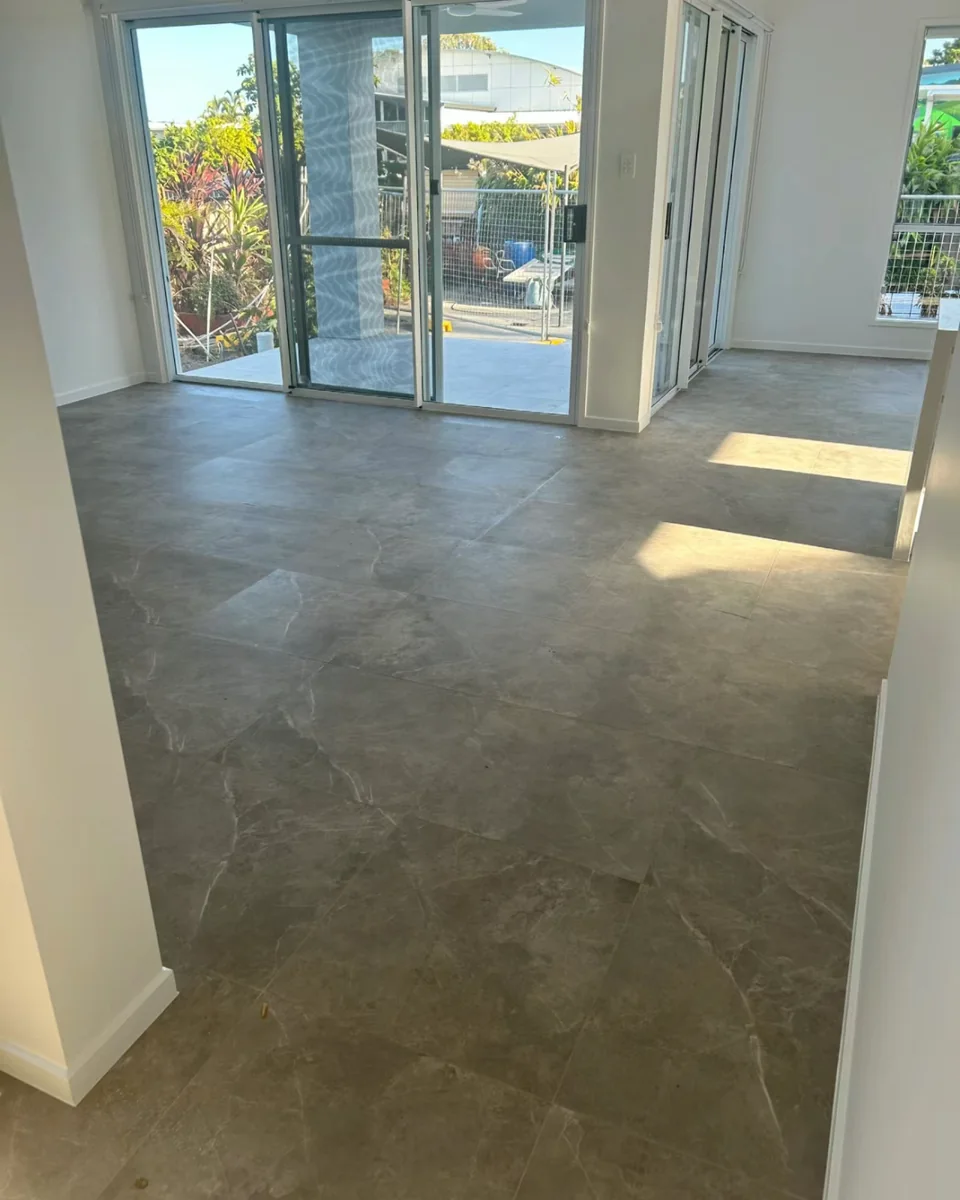
Yes, some existing indoor floor tiles can be tiled over, provided the old installation is sound, the proposed system is suitable and the extra floor height works. Loose tiles, unexplained movement or water damage need investigation first. A new finish does not make a failing layer underneath reliable.
For a Canberra renovation, ask for an assessment of the floor you have before deciding to avoid removal. This guide focuses on that decision for indoor floors; a shower, balcony, pool or wall needs its own assessment.
Start with the old installation, not the new tile sample
ARDEX's tile-on-tile guidance makes the existing bond a condition of the new installation. Its separate SRO900 specification is expressly for internal dry-area floors and excludes existing slate. A document saying “tile over tile” is therefore not approval for every material or room.
Give the tiler a short history: when the floor was installed, whether cracks have returned after repairs, where tiles have lifted, and whether there has been a leak. Photographs help locate concerns; they do not establish the condition of concealed layers. Ask what inspection or testing is needed and how the result will be recorded.
| What you know or notice | What to resolve before choosing an overlay |
|---|---|
| Tiles have lifted or become loose | Why the bond failed and how far the affected area extends |
| Cracks recur after repairs | Whether movement below the finish remains unresolved |
| Old sealer, paint or other coating is present | Whether the proposed preparation and product system accept that surface |
| Installation records are missing | Which assumptions need checking before a firm scope is agreed |
| The floor looks sound | Whether its bond, levels and proposed build-up have actually been assessed |
Avoid turning an initial visual impression into a promise that no removal will be needed.
Walk through the finished floor height
Plan the finished level, including preparation layers, adhesive and the chosen tile. As a practical layout check, walk through the room with the proposed build-up marked at each junction. Ask the installer to show how each detail will finish rather than quoting a universal allowance in millimetres.
- Doorways: will the door open freely, and how will the edge meet the next room?
- Kitchen appliances: can the dishwasher still be removed from beneath the benchtop?
- Cabinet bases and skirtings: which edges remain visible and which need adjustment?
- Sliding-door tracks: how will the new surface terminate without obstructing the track?
- Steps and thresholds: does the added layer change a step or create an awkward transition?
Record who is responsible for any joinery or door adjustment. Our stairs and thresholds guide explains why these junctions deserve a separate check.
Ask for a complete preparation and adhesive system
“Use a primer” is not a complete specification. Request the preparation method, any repair or levelling layer, primer and adhesive names, and the current manufacturer instructions for the actual combination.
For example, SikaTile-015 Prep N Prime lists existing soundly fixed tiles among its uses, but its data sheet excludes tiles or stone with previous sealers or coatings and says it is not a waterproofing membrane. That is a product-specific example, not a product recommendation for your floor. Have the supplier confirm any uncertain surface or combination.
Ask how existing movement joints will continue through the new finish. ARDEX TB117 requires that continuity; a fresh tile layout must not simply conceal them. See our tile layout and movement-joint guide when reviewing the set-out.
Keep wet areas and outdoor floors out of a dry-floor shortcut
An intact-looking shower floor does not prove that its waterproofing is intact. ARDEX's homeowner guidance highlights the risk when the original membrane's condition is unknown. If there is a leak, agree on investigation and the waterproofing scope before choosing a cosmetic finish. Our bathroom waterproofing guide sets out the coordination questions.
Outdoor overlays need separate advice. ARDEX TB251 discusses concealed damage, trapped moisture and difficult drainage details when waterproofing and tiling over existing exterior tiles; it does not offer a standard system for that application. An indoor kitchen-floor proposal should not be copied onto a Canberra balcony or deck.
Check older materials before any preparation work
The ACT Government says asbestos cannot be identified by appearance and recommends a licensed asbestos assessor to assess suspect material. Grinding, sanding or drilling asbestos-containing products can release fibres. If older floor layers or backing materials are uncertain, resolve that before anyone disturbs them; choosing an overlay does not settle the safety question.
Do not lift a sample tile or grind an unknown surface yourself to help with the quote. Use our Canberra asbestos pre-removal checklist to prepare questions and records for the appropriate assessor and trades.
Compare two scopes before accepting a quote
Ask for an overlay option and a removal-and-rebuild option where both are technically viable. Compare what is included: assessment, preparation, local repairs, finished levels, transitions, waste handling, product system and access to the room. Ask what finding would change the recommendation and how extra work would be agreed.
Is tiling over tiles always cheaper? No fixed saving can be assumed. Request prices for the actual scopes, including the adjustments needed at room edges.
Does a bonding primer fix loose tiles? It prepares an accepted surface for the next layer; it does not replace the need to assess the existing installation.
Can I keep using the room straight away? Ask for the selected system's curing and return-to-use instructions. Do not treat a primer's drying time as the time the whole floor is ready.
For floor and wall tiling in Canberra, send LITA Tiling an enquiry with room photos, approximate dimensions, doorway and appliance details, and any records of leaks or previous repairs. Ask whether an overlay assessment or removal scope is appropriate before ordering materials.
Sources and further reading
- TB117 - Applications of tiles onto pre-existing tiles - ARDEX Australia
- SRO900 - Tiling over existing tiles: internal dry area floors only - ARDEX Australia
- SikaTile-015 Prep N Prime product data sheet - Sika Australia
- Tile-on-tile: what you need to know before tiling over existing surfaces - ARDEX Australia
- TB251 - Waterproofing and tiling over existing tiled surfaces externally - ARDEX Australia
- Asbestos in ACT homes - ACT Government