Maintenance
How to Clean Tiles and Grout Without Damaging Them
Start with the tile, grout and sealer you actually have. A careful test and a repeatable cleaning routine are more useful than a stronger bottle.
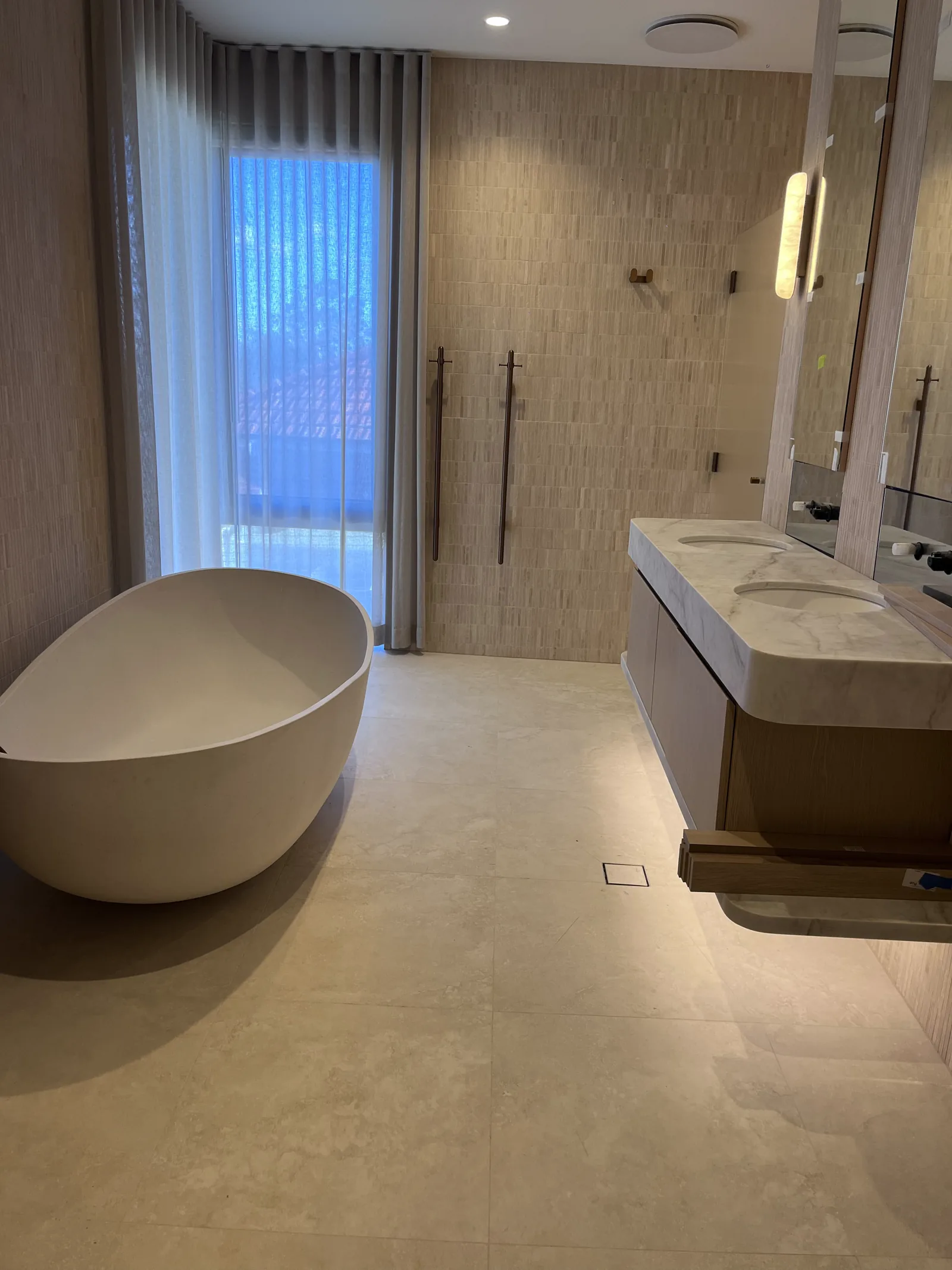
For routine tile and grout cleaning, choose a pH-neutral tile cleaner approved for your particular surface, follow its dilution instructions and test a small hidden area first. Avoid treating vinegar, acid cleaners or concentrated bleach as universal solutions. A product that suits the tile face may still damage its grout or neighbouring finishes.
For Canberra households, the useful starting point is a room-by-room care record. The kitchen splashback, shower joints and entry floor may need different treatment even when their colours look similar.
Identify the whole surface before buying a cleaner
Keep the tile invoice or spare-box label, grout product name and any sealer instructions together. If those records are missing, ask the installer or supplier to identify the materials before choosing a specialist treatment.
| What to identify | Question to put to the supplier |
|---|---|
| Tile material and finish | Is this porcelain, ceramic, natural stone or another surface, and what cleaner is approved? |
| Grout | Is it cement-based, epoxy or another formulation? |
| Sealer or colour coating | Does it have its own cleaning restrictions? |
| Adjacent surfaces | Can the cleaner touch the metal trim, screen, vanity and silicone? |
| Recent installation | When may this assembly be cleaned and returned to use? |
ARDEX's grout-maintenance bulletin distinguishes acid-resistant epoxy products from its cement-based grouts, which acids can attack. That distinction is a reason to identify the installed product, not permission to apply acid across an entire bathroom.
Set up a small test you can evaluate
Choose an inconspicuous patch that includes both tile and grout. Photograph it dry, record the cleaner and dilution, follow the label, then compare the dry result in similar light. ARDEX specifically recommends an inconspicuous-area test before wider cleaning.
Stop if the patch changes colour unexpectedly, loses its finish or sheds grout. Keep the packaging and photographs for the supplier. Do not add another chemical to try to reverse the result.
Build a simple routine
- Remove loose dust and grit before wet cleaning.
- Use the approved cleaner at its labelled dilution, with a suitable mop, cloth or gentle brush.
- Follow the stated contact time and instructions for keeping the surface wet.
- Remove the dirty solution. Where rinsing is required, use fresh water rather than redistributing the same dirty bucket.
- Let the area dry before assessing the result and returning it to normal use.
Aqua Mix's porcelain and ceramic maintenance guidance separates routine neutral cleaning from heavier treatments. Its wider maintenance guide emphasises removing cleaner residue and dealing with spills promptly. Start a household schedule from actual use and visible build-up; there is no single cleaning interval for every tiled room.
Avoid turning a stain into surface damage
Vinegar and acidic descalers: ARDEX's discolouration guidance identifies incorrect or excessive acid use, including vinegar-based cleaning, as a cause of grout deterioration and uneven colour. Confirm compatibility before treating a mineral mark.
Concentrated bleach: it can change coloured grout. Never mix bleach with other chemicals; the NHMRC's safety guidance explicitly warns against this. Follow the label's handling and protective-equipment requirements.
A persistent film on new work: ask the installer whether it is grout residue before buying a stronger cleaner. Aqua Mix distinguishes cement grout haze from epoxy residue and uses different treatments. A white film is not enough information to select one.
Keep cleaning and repairs separate
If grout is missing, a joint has opened or tiles move, photograph the condition and arrange an assessment instead of scrubbing harder. Water appearing outside a shower also needs investigation. See our regrout, reseal or re-tile guide for the difference between surface maintenance and repair.
Sealing is a separate decision. Some grout systems benefit from an appropriate sealer, while epoxy grout generally does not need one. Check the grout and sealer instructions together rather than adopting a universal annual resealing rule.
Keep a care card with your renovation records
Write down the room, tile and grout products, approved cleaner, dilution, test location and date, and the supplier's contact. Add a photograph of the labels. If someone else cleans the house, give them the same care card before they start.
For a renovation still being planned, include maintenance questions in your Canberra tiling quote checklist. For damaged joints, see our tile repairs and regrouting service. For an assessment or a proposed tile replacement, contact LITA Tiling with wide and close-up photos, the location and any available product records. State whether you need a repair assessment or advice about a planned installation.
Sources and further reading
- General maintenance of porcelain and ceramic tiles - Aqua Mix Australia
- Surface maintenance guides - Aqua Mix Australia
- TB186 - Cleaning and maintenance of ARDEX grouts - ARDEX Australia
- TB130 - Sources of grout discolouration - ARDEX Australia
- Grout care - Aqua Mix Australia
- Staying healthy - A healthy environment, safe use of bleach - National Health and Medical Research Council