Repairs
Regrout, Reseal or Re-Tile Canberra Showers
Cracked grout, mouldy silicone and a leaking shower can appear together, but they do not all have the same cause or repair.
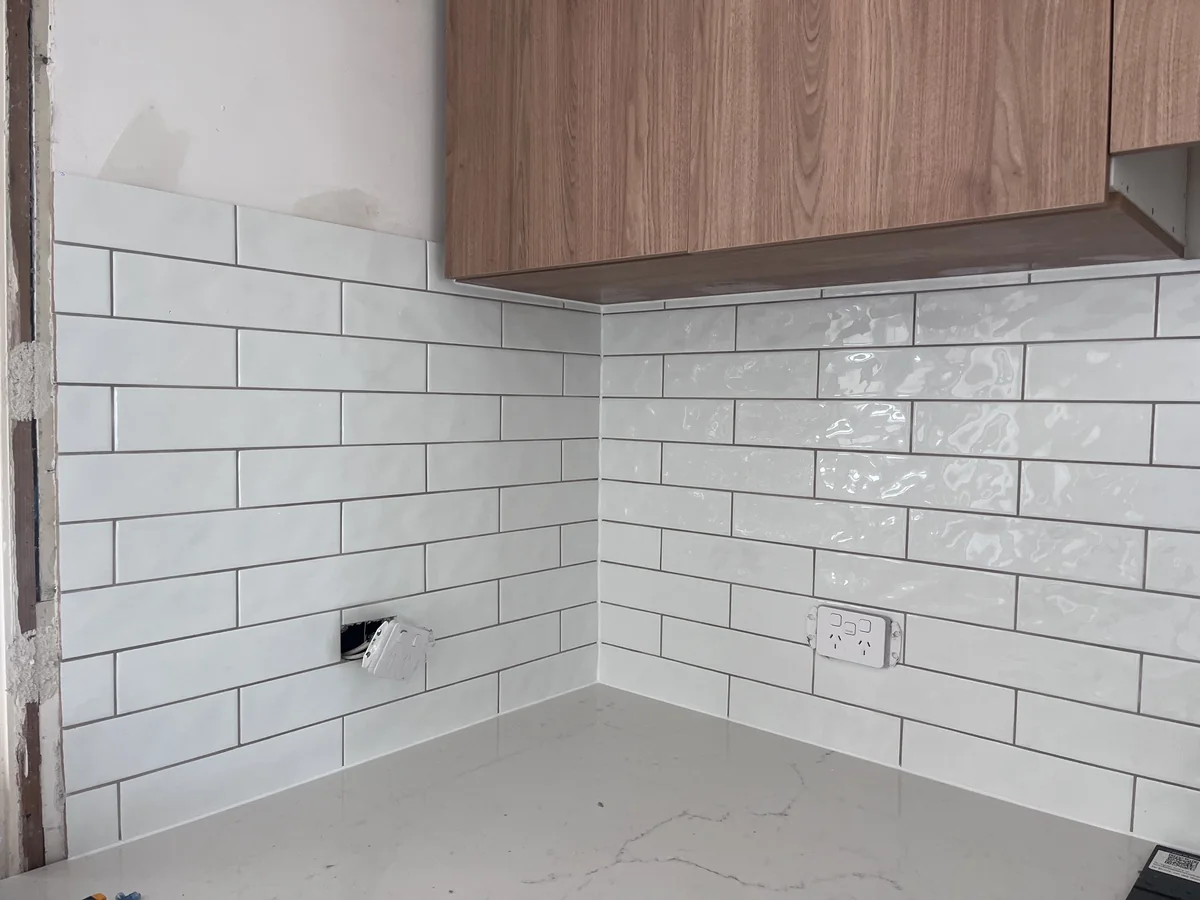
Homeowners often use “regrouting” to describe any shower refresh. Grout renewal can improve a suitable worn surface, but it cannot repair every loose tile, moving junction or failed waterproofing system.
Before choosing a treatment, separate the visible symptom from the possible cause.
What grout does
Grout fills the regular joints between tiles and supports the finished appearance. Depending on the selected product, it can resist normal service conditions and cleaning, but a grout joint is not the concealed wet-area membrane.
Regrouting may be considered when:
- the existing grout is locally worn, stained or missing;
- tiles remain sound and stable;
- the substrate and wet-area system show no known wider failure;
- enough old material can be removed for the replacement product;
- the proposed grout is suitable for the joint and location.
Applying a thin cosmetic layer over contaminated or failing grout may not provide a durable result.
What silicone does
Flexible sealant is commonly used at changes of plane and selected junctions where rigid grout is not intended to accommodate movement. Shower corners, wall-to-floor interfaces, screen channels and vanity junctions may include silicone as part of the finish.
Resealing can be appropriate when the old silicone has separated, cracked, discoloured or become difficult to clean, provided the joint and surrounding construction remain suitable.
The old sealant, soap residue and contamination need to be removed sufficiently for the replacement system. New silicone should not simply bridge loose material or trap an active moisture problem without assessment.
What a loose or cracked tile may indicate
One cracked tile can result from impact, product weakness, substrate movement, an unsupported area or stress at a junction. A hollow sound can have several explanations and does not by itself prove one diagnosis.
A local replacement may be possible when:
- a matching spare tile is available;
- the tile can be removed without unacceptable damage to adjoining work;
- the base can be prepared within a defined repair area;
- there is no evidence that the same failure extends widely;
- the repair will not compromise concealed waterproofing.
When many tiles are loose, cracks repeat in a line, or the surrounding base moves, a patch may only hide a larger condition.
Active leakage changes the question
If water is appearing outside the shower, staining a ceiling, swelling a wall or affecting an adjacent room, do not assume fresh grout will solve it. The source could involve plumbing, screen and door containment, sealant, drainage, penetrations, the waterproofing system or more than one issue.
Record when the moisture appears and stop using the area if continued use may cause damage. A controlled assessment is more useful than repeatedly sealing the most visible crack.
Be cautious with tile-over-tile shortcuts
Installing new tiles over existing tiles can be possible in selected, sound applications with a compatible system. It is not an automatic repair for a leaking or unstable shower. The old finish adds weight and preserves concealed conditions; it does not explain why the original system failed.
ARDEX Australia technical guidance notes that the existing tiled surface needs to be sound and suitable, with preparation and loading considered. Pools and widespread failures introduce further limits. A product label saying “tile over tile” is not permission to ignore the condition underneath.
A useful symptom checklist
Before requesting a repair quote, note:
- exact location of cracked or missing grout;
- whether silicone is split, detached or mould-stained;
- number and location of loose or cracked tiles;
- any water outside the shower and when it appears;
- previous repairs or coatings;
- age of the visible finish if known;
- availability of spare tiles;
- photos from inside and outside the shower.
Match the scope to the evidence
Choose regrouting for a suitable grout problem, resealing for a suitable flexible-joint problem and tile replacement for a genuinely local tile problem. If the evidence suggests moisture behind finishes, movement or repeated failure, investigate before promising a surface-only cure.
LITA Tiling handles suitable tile repairs, regrouting and silicone work in Canberra. Send overview photos and a short history so the first response can define what is known and what still needs inspection.
Sources and further reading
- Construction Note 01/2023 - Wet Areas - Access Canberra
- Tile-on-tile: what you need to know - ARDEX Australia
- Waterproofing in houses - Australian Building Codes Board