Tile selection
Porcelain vs Ceramic Tiles: Which Suits Your Canberra Home?
Porcelain is a type of ceramic tile, but a harder or denser product is not automatically the best choice for every wall, floor or renovation.
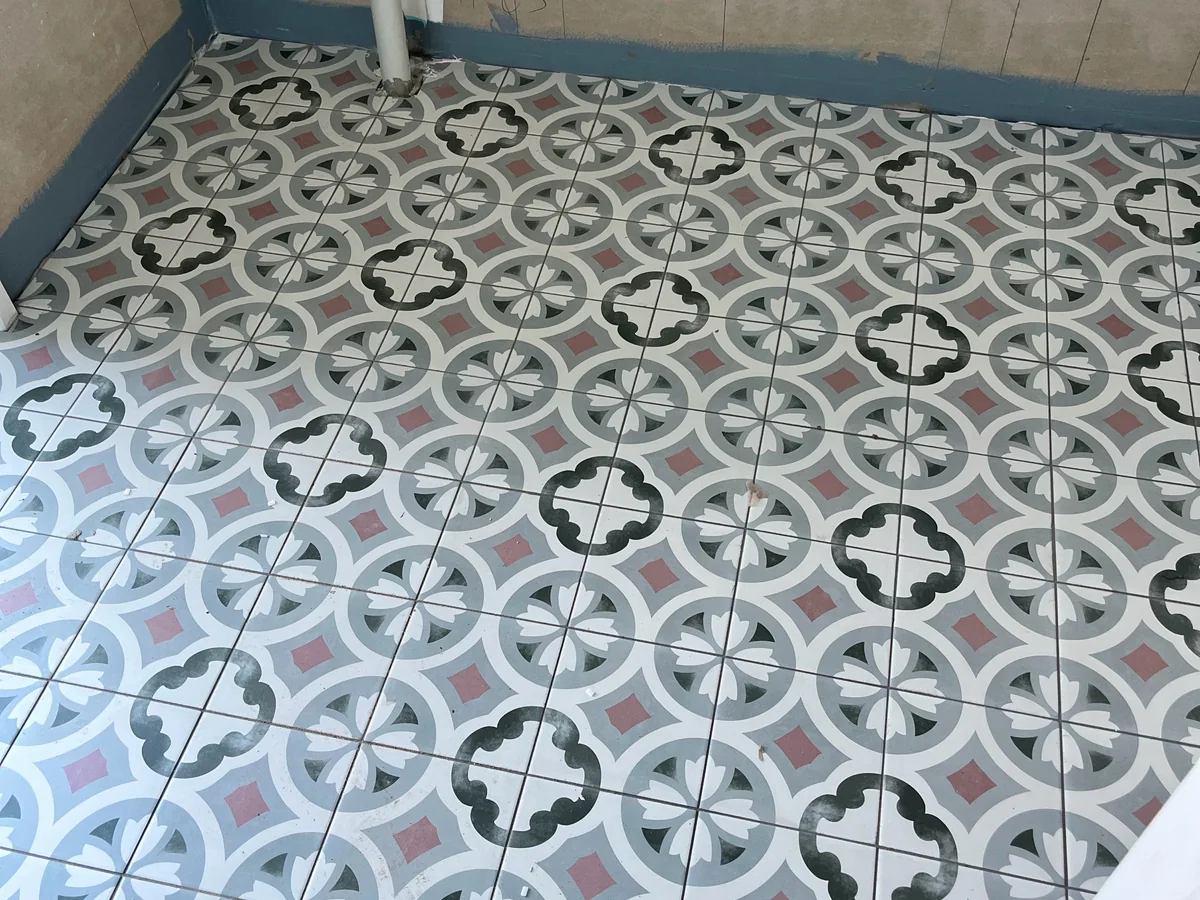
Porcelain and ceramic are often presented as competing materials. Technically, porcelain is a type of ceramic tile with a denser body and very low water absorption. Non-porcelain ceramic tiles cover a broad range of products, including many familiar glazed wall tiles.
The useful question is not “which material is always better?” It is “which tested product suits this surface, exposure, design and installation?”
The practical difference
Porcelain tiles are generally made from refined clay compositions and fired to produce a dense body. Australian tile retailers commonly describe porcelain as having water absorption below 0.5 per cent. This density can support durable floor and external products, but porcelain also includes many different finishes and formats.
Non-porcelain ceramic tiles are often easier to cut and are widely used on residential walls and lower-demand internal surfaces. A glazed wall tile can be an excellent choice for a splashback or bathroom wall even though its body does not meet the porcelain classification.
Material family alone does not tell you:
- whether a tile is rated for floors;
- how slippery its surface may be when wet;
- whether it suits outdoor exposure;
- whether it needs sealing;
- whether a particular adhesive and substrate are compatible;
- how much shade or dimensional variation to expect.
Read the individual product data.
Where porcelain often makes sense
Porcelain is commonly selected for high-use floors, open-plan living areas, entries and some outdoor applications. Its density and available finishes make it versatile, and many ranges offer matching internal and external versions.
It may be useful when you need:
- a hard-wearing residential floor;
- a low-absorption tile body;
- a large-format tile range;
- a product designed and tested for a specified external or wet application;
- visual effects that reproduce stone, concrete or timber.
However, a polished porcelain floor and a textured external porcelain tile behave very differently underfoot. “Porcelain” is not a slip-resistance rating.
Where a standard ceramic tile may be the simpler choice
Glazed ceramic wall tiles remain practical for bathrooms, laundries and kitchen splashbacks. They can be lighter and easier to cut around outlets, fittings and detailed wall layouts. Smaller formats may also give more flexibility around curves, niches and changes in plane.
For a wall that does not need the performance of a heavy floor tile, selecting an appropriate ceramic wall product can reduce unnecessary cutting difficulty and structural load. The design range is broad, including gloss, matt, handmade-look and patterned finishes.
Tile body is only one selection factor
For Canberra homes, consider the complete application:
Surface and traffic
Is the tile going on a bathroom wall, living-room floor, entry, splashback, outdoor step or pool? Each location has different wear, moisture and slip considerations.
Finish and cleaning
Highly textured surfaces may provide useful grip in some applications but can require more cleaning effort. Very smooth or polished surfaces may show marks differently and may not suit every wet location.
Size and substrate
Large porcelain tiles can be heavy and less forgiving of an uneven base. A smaller ceramic tile may follow a detailed wall set-out more easily. Neither option eliminates the need for suitable preparation.
Edge and pattern
Rectified tiles can support narrow, consistent-looking joints when the product, substrate and layout allow. Pressed-edge or intentionally irregular tiles create a different visual result and may need a different joint approach.
Spare material
Keep suitable spare tiles after installation. Product batches and ranges change, and a future repair is easier when matching material is available.
Questions to ask before ordering
- Is this exact product approved by the supplier for the intended wall, floor, wet or external application?
- What are the tile dimensions, thickness and weight?
- Is there a declared slip-resistance classification where relevant?
- Does the finish or material require sealing or special maintenance?
- What variation should be mixed across boxes during installation?
- Are matching trims, mosaics or external-finish versions available?
- How much extra material is sensible for cuts, selection and future spares?
Choose the application before the label
Porcelain is not automatically an upgrade, and ceramic is not automatically a compromise. A well-chosen wall tile can be simpler and more appropriate than a heavy floor product. A tested porcelain floor tile may be the better option where wear, moisture exposure or format demands it.
If you are planning floor and wall tiling in Canberra, send the product link with your room photos. The tile can then be considered alongside the substrate, layout and intended use rather than by material name alone.
Sources and further reading
- Selecting the right tile for my space - Beaumont Tiles
- Tile materials and finishes explained - Beaumont Tiles
- Part 10.2 Wet area waterproofing - Australian Building Codes Board