Outdoor tiling
Outdoor & Pool Tiling Canberra: Climate, Drainage & Tiles
Canberra outdoor tiles face wet use, strong sun and seasonal temperature change, while pool interiors add permanent immersion and chemical exposure.
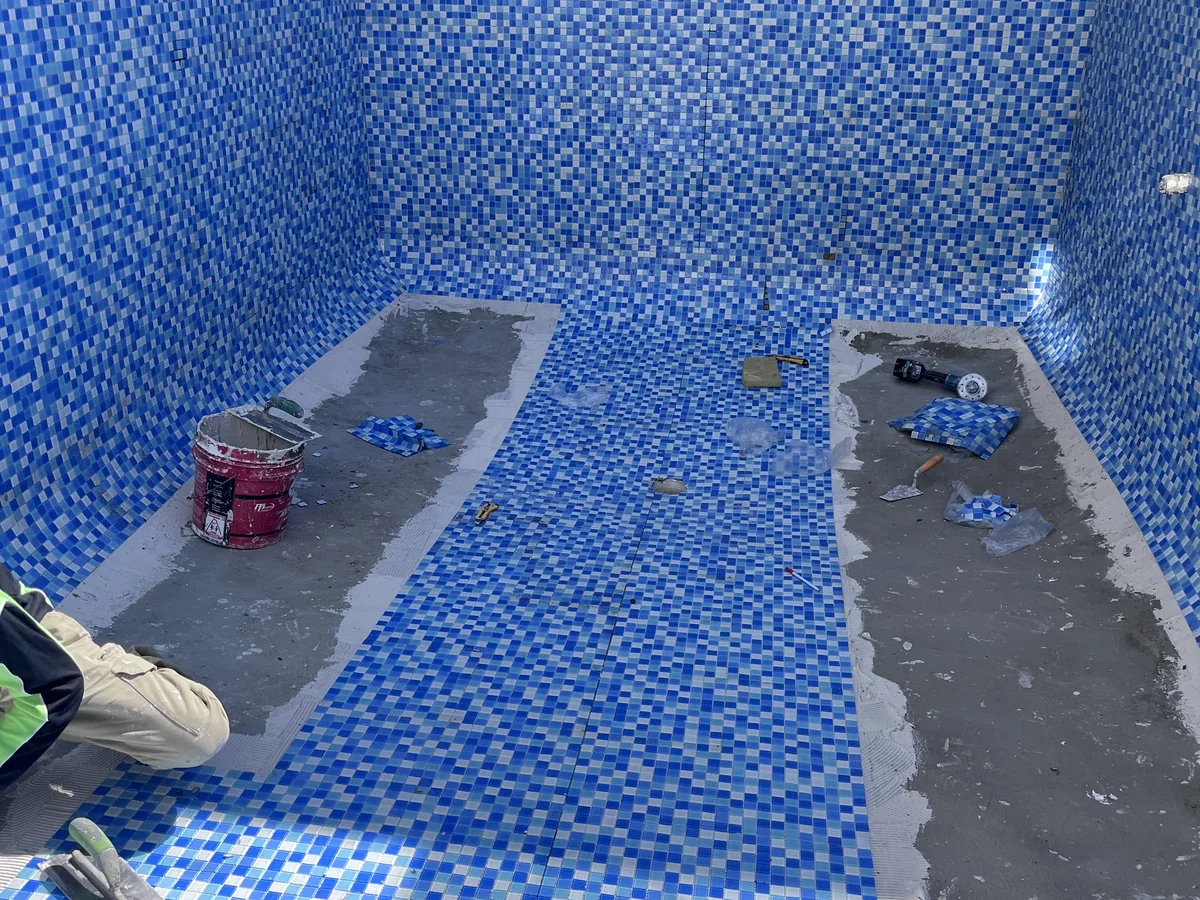
Outdoor and pool tiles are exposed to conditions that do not exist on a dry internal wall. In Canberra, surfaces may move through cold winter conditions, strong summer sun, rain and repeated wet-dry cycles. Pool interiors add permanent immersion, treatment chemicals and a refill sequence after installation.
The right project begins with exposure and system selection, not colour alone.
Use local climate as a design input
Bureau of Meteorology records for Canberra show substantial seasonal temperature variation. A dark external tile in direct sun can also become much hotter than the reported air temperature, while winter nights can be cold enough to influence exposed materials and curing conditions.
This means the project should consider:
- orientation and hours of direct sun;
- sheltered versus fully exposed surfaces;
- drainage and how long water remains after rain;
- substrate and tile movement;
- temperature limits during installation and curing;
- protection from frost, rain or rapid drying where relevant to the selected products.
An adhesive described as “external” still has a product-specific substrate, temperature and application range.
Select the exact tile for the exact zone
“Outdoor tile” can describe pavers, porcelain tiles, mosaics, natural stone and other products with very different properties. A pool waterline, pool interior, covered patio and uncovered entry are not the same application.
Ask the supplier to confirm in writing whether the exact product is intended for:
- external floors or walls;
- wet barefoot areas;
- pool surrounds;
- permanent immersion;
- treated pool water;
- the proposed fixing and grout system.
A tile suitable beside a pool is not automatically suitable inside it.
Slip information needs context
External stairs, ramps and landings have specific NCC slip-resistance considerations, and manufacturers may provide classifications from recognised tests. Around a wet residential area, the surface also needs to be assessed for barefoot use, drainage, maintenance and the users of the property.
Do not compare products by texture names such as “matt,” “grip” or “structured” alone. Request the declared test information and intended use. More aggressive texture can improve traction in some conditions but may increase cleaning effort.
Drainage starts below the tile finish
Outdoor tiles should not be expected to create drainage on a base that holds water. The substrate, falls, wastes or edges need to move water away as designed. Water trapped at terminations or beneath unsuitable finishes can stress the system.
Before installation, resolve:
- where surface water goes;
- how the tiled plane meets doors, garden edges and adjoining paving;
- movement or control joints in the substrate;
- pool coping, waterline and overflow interfaces;
- penetrations and fittings;
- responsibility for rectifying an unsuitable base.
Pools require a compatible complete system
A pool installation includes more than a “waterproof glue.” The prepared shell or substrate, waterproofing where specified, tile, adhesive, grout, movement treatment and curing/refill procedure need to be compatible with permanent wet exposure.
Repair work also needs diagnosis. A few detached mosaics may be local, but repeated loss, widespread hollow areas, cracking or moisture movement can indicate a broader condition. Attaching new tiles to an unsound layer does not restore the layer underneath.
Movement joints should remain functional
Exterior tiled areas experience thermal and moisture movement. Existing substrate joints and designed movement locations should not be rigidly bridged for visual continuity. Perimeters, changes of plane and large areas may need planned accommodation according to the system and project design.
Discuss joint locations while choosing the tile pattern. A movement joint is less disruptive when it aligns with the layout rather than appearing as a late correction.
Plan delivery, weather and curing
Outdoor work depends on more than a clear morning. Rain, wind, surface temperature, overnight conditions and direct sun can affect preparation and curing. Pool work also needs a controlled period before filling, based on the actual products and environment.
A quote should identify assumptions about:
- draining and preparing a pool;
- weather protection;
- access and material storage;
- water testing or other specialist responsibilities;
- curing and the party responsible for refill timing.
Avoid selecting a start date from a generic product headline. Follow the complete technical data for the installed system.
Information to send with an enquiry
Provide overview photos, dimensions, tile product links, substrate information if known and a description of existing defects. For pool work, distinguish between waterline, interior, coping and surrounding paving.
LITA Tiling assesses selected residential pool tiling in Canberra and suitable external tile scopes. The first review will confirm whether the requested area fits and what further site information is needed.
Sources and further reading
- Climate statistics for Canberra Airport - Bureau of Meteorology
- Slip resistance advisory note - Australian Building Codes Board
- Tiling systems technical bulletins - ARDEX Australia